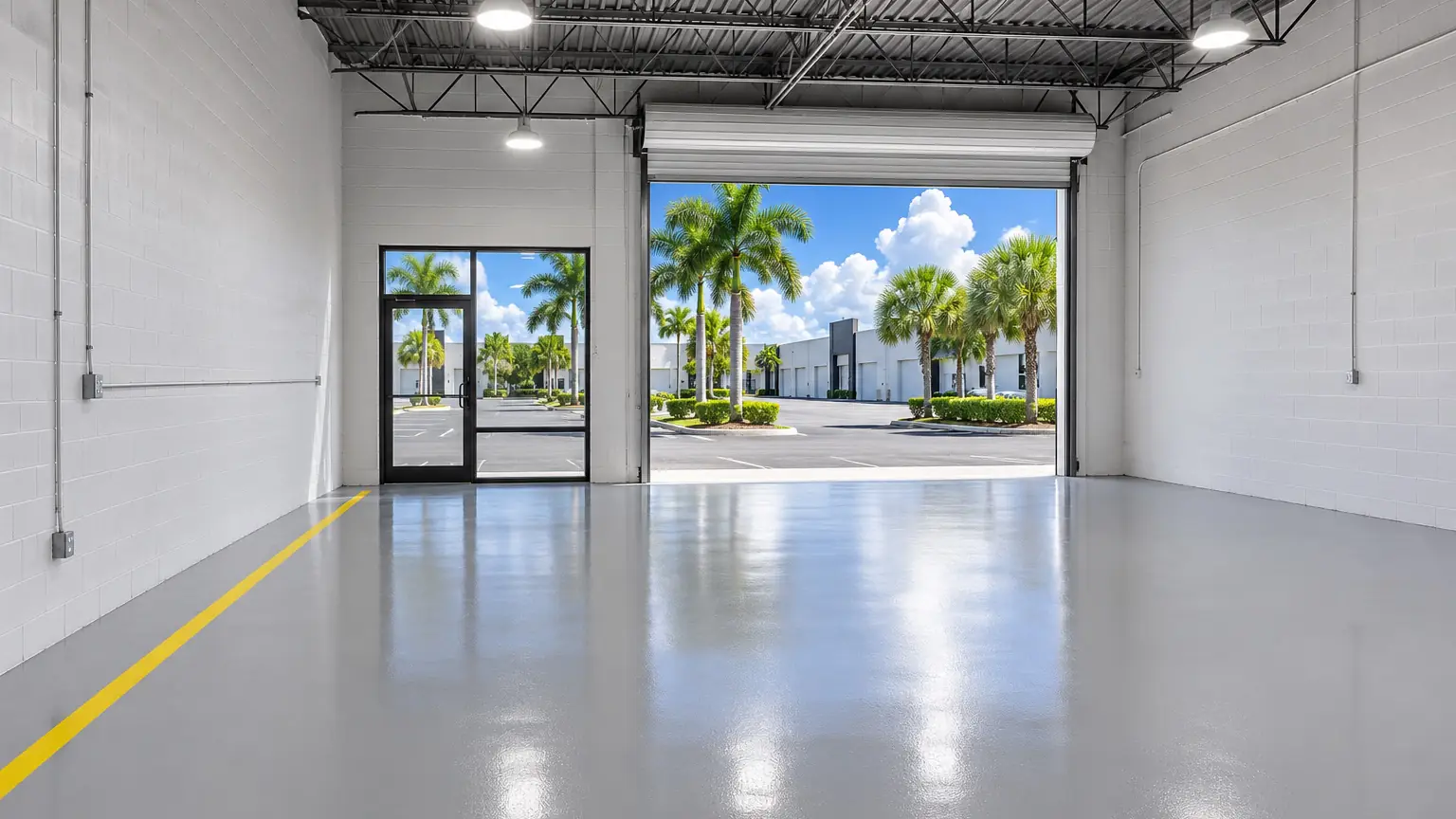
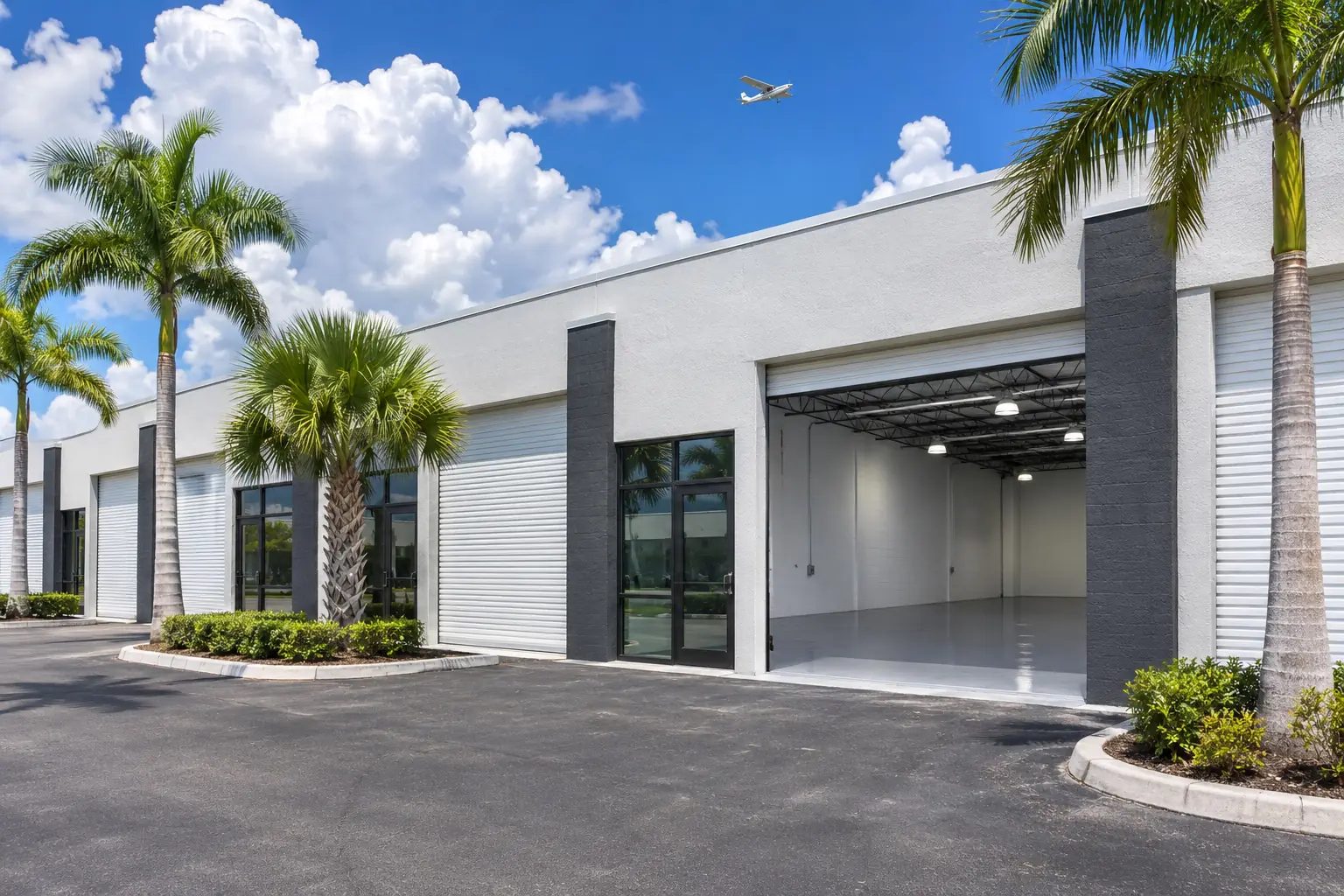
Commercial, industrial and garage floors, plus concrete polishing.
Worried the floor will start peeling at the edges within six months, and the installer will say it's your fault for driving on it too soon? On South Florida slabs that failure nearly always starts underneath, with moisture or skipped prep. We connect owners of warehouses, shops, restaurants, showrooms and home garages across Broward, Miami-Dade and southern Palm Beach with an independent contractor who does epoxy floors and concrete polishing and nothing else. Before anyone gives you a price, ask for a moisture reading and diamond grinding in the written scope. Call (561) 556-9756 and we'll connect you.
Peeling or bubbling in months? Ask for a moisture reading on your slab before any price is written.
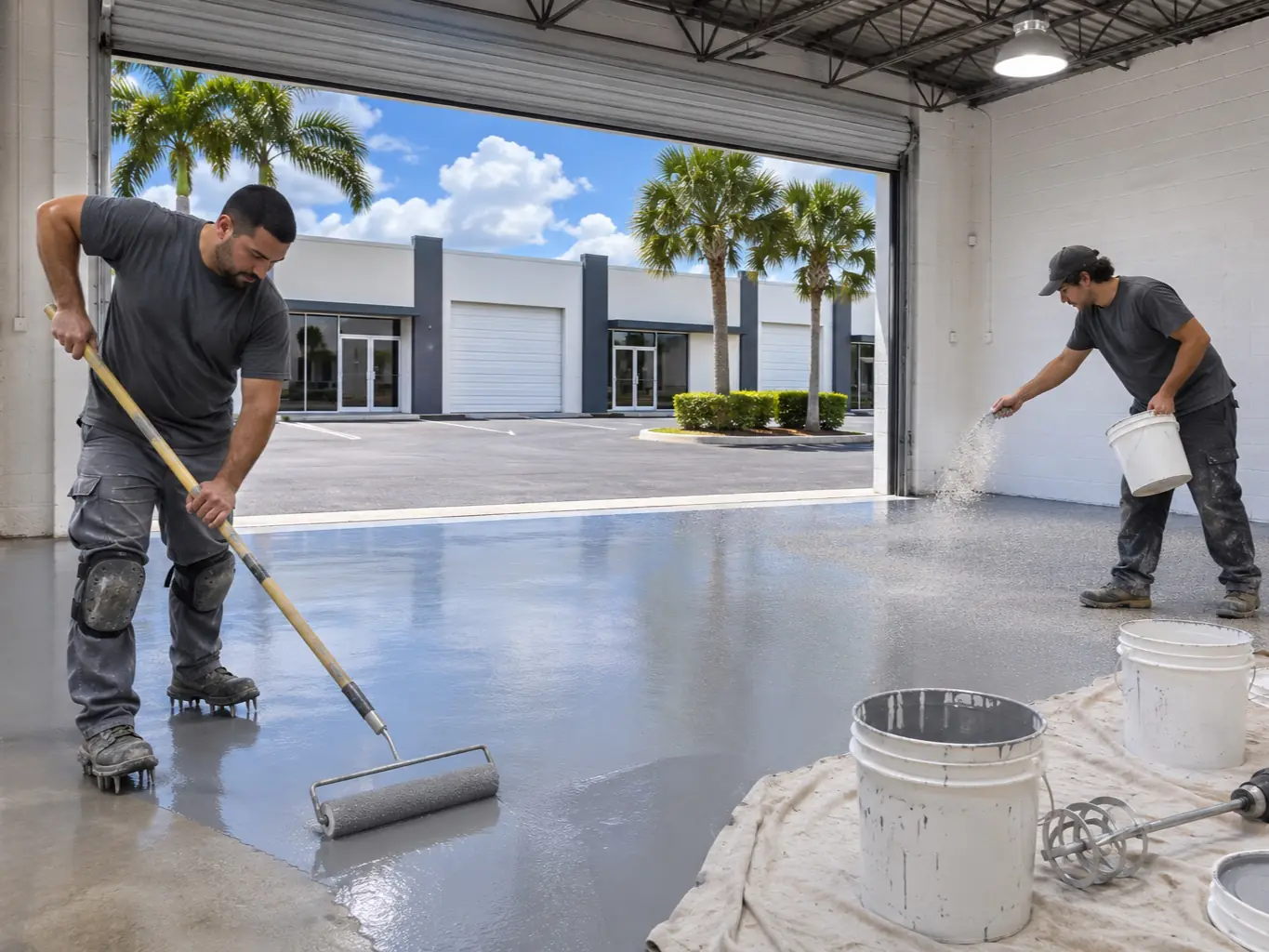
Kitchen or entry slippery when wet? Grit broadcast into the coat gives wet traction. Say where the floor gets wet.
Can't close for a week? Ask for the cure times and an after-hours or weekend schedule in writing.
Not sure epoxy is even right? Polished concrete is on the same call, and sometimes it's the better floor.
If this sounds familiar
These come straight from owners who wrote about their floors online. Each one is preventable, and none of them is the epoxy's fault alone.
He says it's my fault for driving on it too soon
The coating lifts at the edges or under the tires within months, and the installer blames how you used it. When the slab was never ground open or tested for moisture, the coating had nothing to grip. Ask what grinding method and what moisture test are in the scope.
Moisture can make the coating release from the concrete
White powder shows up along the walls, then the coating peels in sheets with water under it. That's moisture pushing mineral salts up through the slab, and the bond failed from underneath, not on top. A slab with a high reading needs a moisture vapor barrier epoxy as the first coat, or a different floor.
Extremely slippery if it was slightly wet
A glossy floor in a restaurant kitchen, a wash bay or a garage that takes rain off the car. Somebody falls. Texture belongs in the coat wherever water, grease or flour lands, and it's cheap to add on day one.
The three things owners worry about most, answered
"Started peeling at the edges within six months"
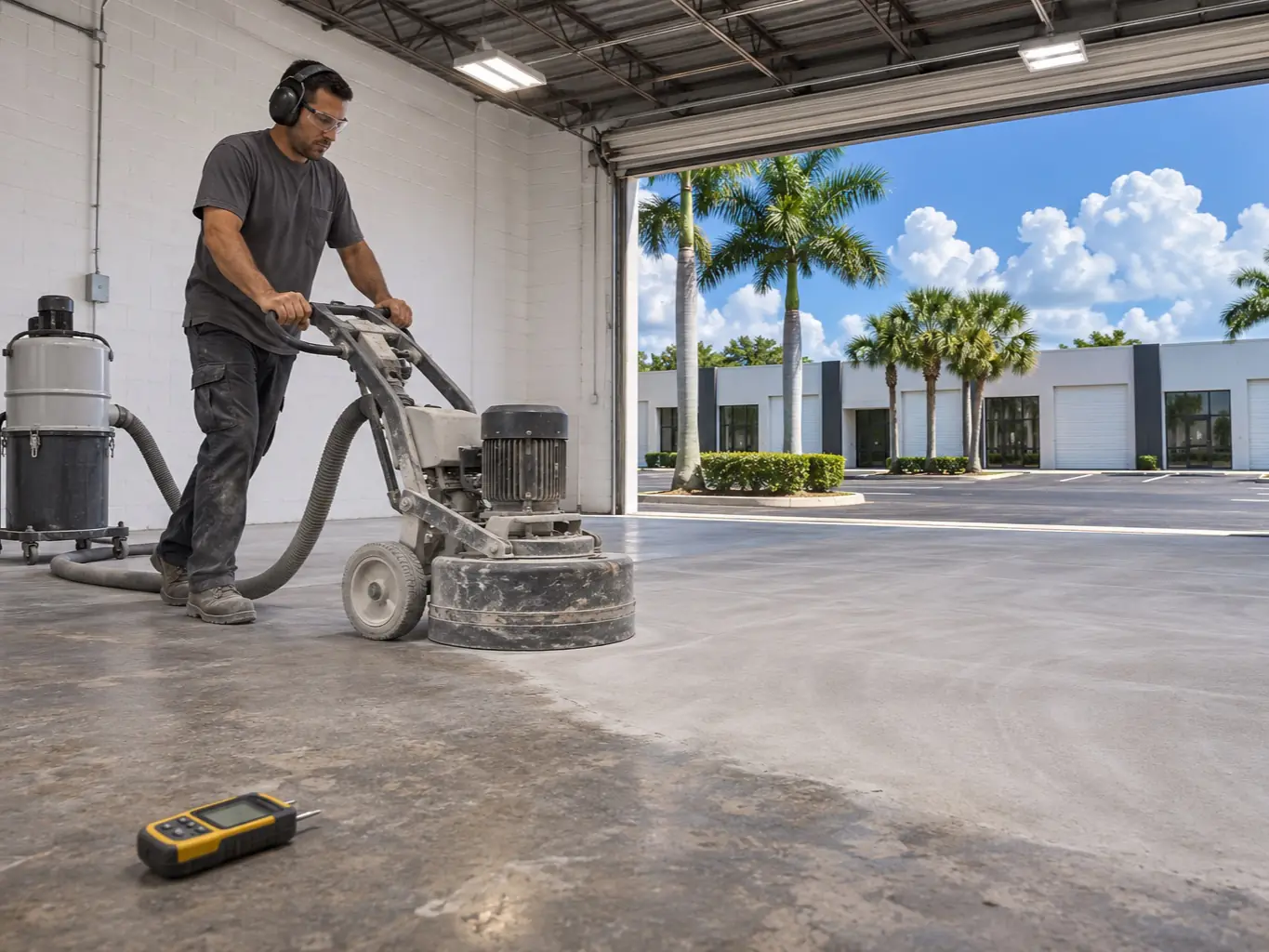
Peeling, bubbling and lifting are bond failures. The bond depends on two things done before any epoxy is mixed: grinding the slab with a diamond grinder so the coating can soak into open concrete, and testing the slab for moisture. Florida slabs sit close to the water table and take months of rain, so a slab can read wet even when it looks dry.
Ask: "How will you prep it, and what was the moisture reading?" If the answer is an acid wash or "it looks fine," keep looking.
Scene image: diamond grinding a bare slab, with a moisture meter on the floor.
"Epoxy is awful" (so is it the wrong floor?)
Plenty of people online swear by polyurea or polyaspartic instead, and for a sunny garage they have a point. Epoxy is still the base coat in most commercial systems because it bonds hard and fills the slab. Which one fits depends on the room: sun, water, grease, forklifts and how long you can close. The comparison table below lays it out.
"I had no idea it would be thousands more"
The price grows when prep, crack repair or a moisture barrier shows up after the crew starts. That's avoidable when the slab is tested and walked first. Ask for a detailed, written proposal that outlines the full scope of work, and what happens to the price if the slab surprises anyone after grinding.
Call now and ask for the moisture test and the scope in writing
The right floor for a dry office showroom is the wrong floor for a wet kitchen. The contractor we connect you with installs epoxy systems and polishes concrete, so either answer is on the table.
Floor
Good fit
Watch out for
Epoxy system (epoxy base, often a urethane or polyaspartic topcoat)
Needs a dry, ground slab. Plain epoxy can yellow where sun hits it through an open roll-up door, so ask about the topcoat
Polyaspartic or polyurea topcoat
Sunny garages and fast turnarounds
Cures fast, so the prep and the crew's speed matter even more
Polished concrete
Big retail and warehouse floors where low upkeep matters most, dry showrooms
Cracks, patches and color differences in the slab stay visible. More on polishing
Urethane cement
Commercial kitchens with hot water, grease and washdowns
Ask whether it's needed instead of epoxy if your kitchen runs hot and wet all day
Last updated
Where epoxy floors go
Commercial and retail floors
Shops, clinics, showrooms, gyms and storefront bays. The question that comes up most is "Can epoxy be installed over a weekend?" Often, for a small space on a sound slab. Ask for the schedule in writing.
Warehouses and industrial floors
Forklift traffic, pallet jacks and fixed aisles. Turning zones wear faster than storage aisles, so ask how thick the system goes on and how a worn lane gets recoated later.
Metallic epoxy
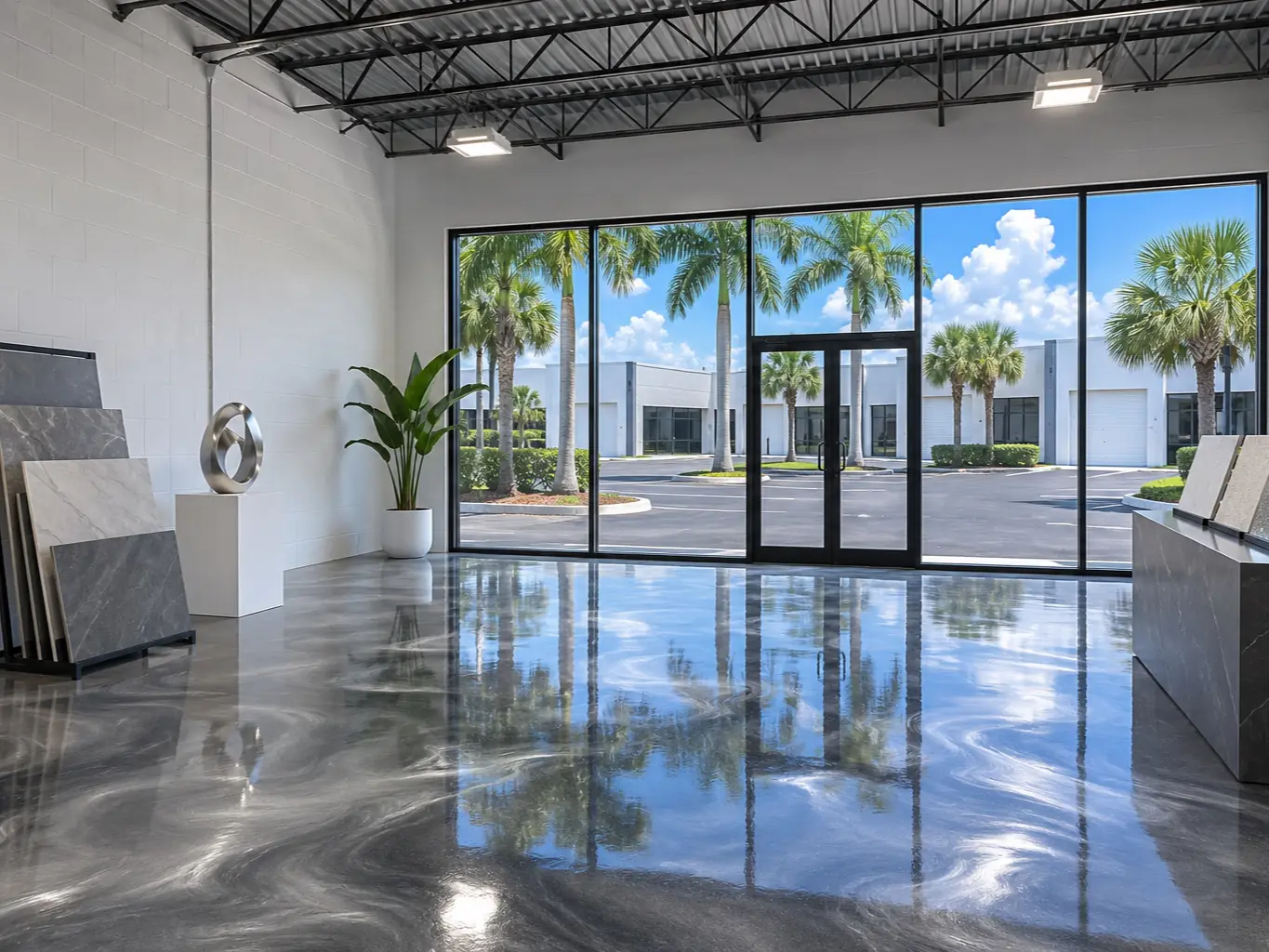
Swirled, high-gloss floors for showrooms, salons and offices. It shows scratches more than a flake floor does, so it suits rooms without dragged chairs or rolling racks.
Garage floors
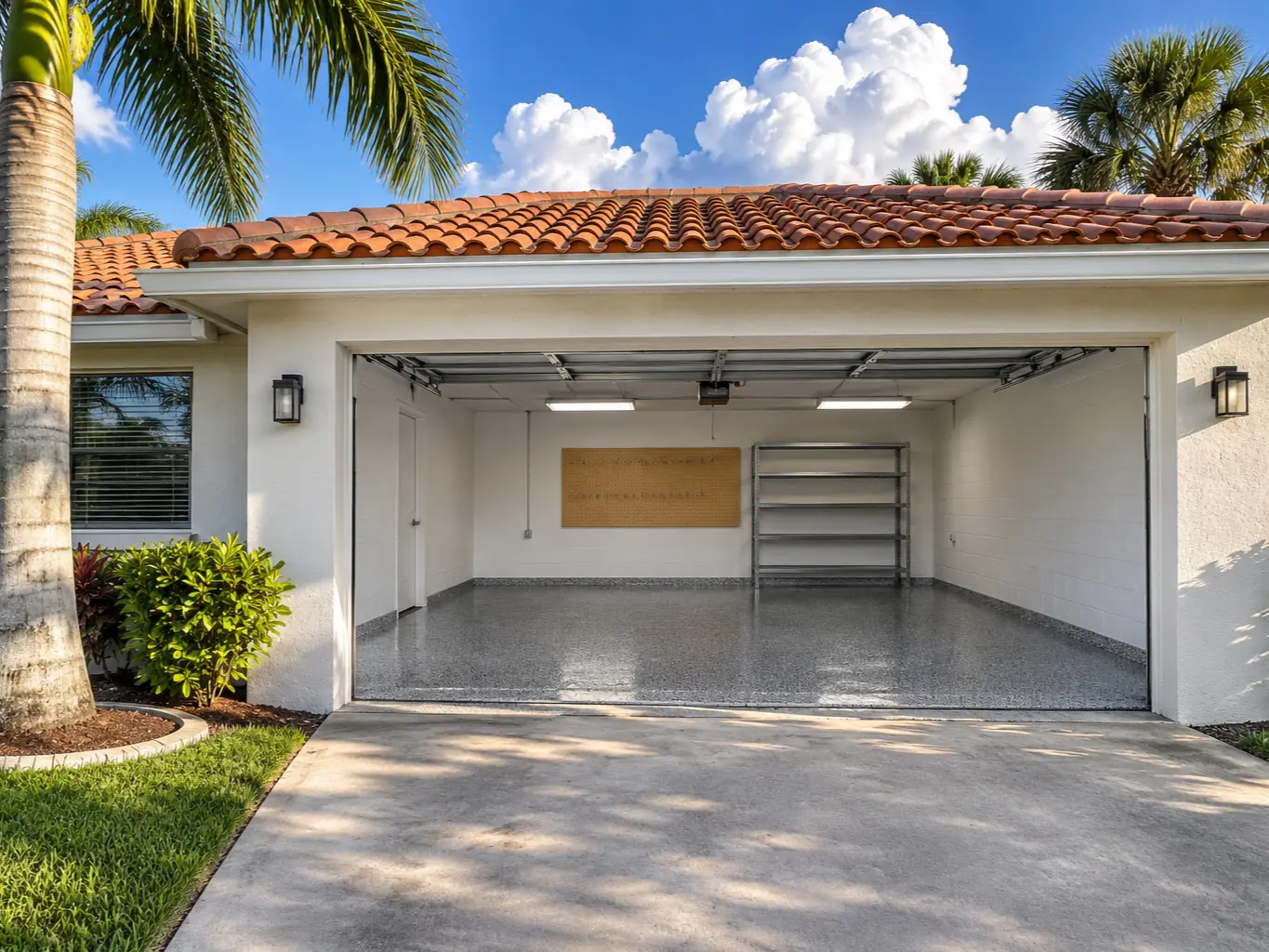
Flake epoxy in home garages across Broward and Palm Beach. Hot tire pickup and slick wet floors are the two complaints to head off: ask about the topcoat and the texture.
What moves the price
Nobody can price a floor without seeing the slab, and anyone who quotes off a phone call is guessing. These are the things that change the number:
Prep. Diamond grinding, crack and joint repair, and removing old coatings or glue. A cheap epoxy quote usually costs more later because the savings come from skipped concrete prep, thinner materials, rushed labor, or no moisture protection.
Moisture. If the slab reads wet, a vapor barrier coat is added. One installer puts that at $1 to $10 per square foot on its own (CPC Floor Coatings), which is why it belongs in the first quote, not the final bill.
The system. Number of coats, thickness, flake or metallic, and the topcoat.
Size and access. Small rooms cost more per square foot than open floors.
One installer's advice on Reddit is worth repeating: anyone who gives you a price of $4 a square foot or lower, be very cautious and ask what's being left out.
What South Florida does to a floor
Rain is the big one. The National Weather Service in Miami counts the wet season from May 15 to October 15, and it brings roughly 70% of the year's rain. Slabs sit on flat ground with water close underneath, and moisture rises through concrete that looks dry on top. That's why the moisture reading matters more here than in most of the country.
Humidity is the second. Epoxy cured in a humid room can turn cloudy or stay soft, so a closed, conditioned space or a dry day matters, and so does the dew point at the slab.
Sun is the third. Bays with roll-up doors open all day, and garages facing west, put sunlight right on the floor. Plain epoxy can yellow there; a UV-stable topcoat holds the color.
What a sound install looks like
Use this as a checklist on the call and at the site visit.
The call. You describe the space, the square footage, what drives or spills on it, and how long you can close.
The walk. The slab is looked at in person: cracks, old coatings, oil stains and a moisture reading.
The written scope. Prep method, moisture plan, coats and thickness, topcoat, texture, cure times and price.
Prep day. Diamond grinding, dust control, crack and joint repair.
Coating. Base and build coats, texture where it gets wet, topcoat.
Cure. Most systems take light foot traffic at about 24 hours and reach full chemical cure in about a week. Ask for your system's numbers.
Other things owners ask about
How long will the business be closed?
It depends on size, the slab and the system. Small spaces on sound, dry slabs can often be done over a weekend. A warehouse is usually done in sections so part of it keeps working. Get the plan in writing, including when forklifts and heavy racks can come back.
Hot tire pickup and forklift wear
Hot tires can lift a thin or poorly bonded coating; forklifts wear fixed lanes first. Both are prep and thickness questions more than brand questions. Ask how thick the system is and how a worn lane gets recoated later.
Grease and commercial kitchens
A home-store garage kit worked fine for a bit until the grease started eating away at parts of it, as one restaurant owner put it. Kitchens need a system built for heat, grease and washdowns, with texture. Say it's a kitchen on the first call.
Deposits and warranties
The worst stories online are deposits that vanished and warranties from a company that changed its name. Ask what the warranty covers and what it doesn't, get it in writing with the company's legal name, and get the payment schedule in writing. On home jobs, Florida's section 489.126 sets rules for contractors who take more than 10% up front.
Can epoxy be installed over a weekend for a commercial space?
Sometimes, for a small space on a sound, dry slab. Most systems take light foot traffic at about 24 hours and reach full chemical cure in about a week, so a weekend install usually means reopening to foot traffic first and heavy equipment later. Get the schedule in writing.
Is epoxy slippery when wet?
A smooth, glossy epoxy floor can be slippery when wet. Broadcasting grit such as sand or aluminum oxide into the coat gives it texture and wet traction. Ask for it anywhere water, grease or rain reaches the floor.
Will all epoxy floors yellow after some time?
Plain epoxy can yellow where sunlight hits it, such as near an open roll-up door or in a west-facing garage. A UV-stable topcoat over the epoxy holds the color. Ask which topcoat is in the quote.
Why do epoxy floors peel in Florida?
Most peeling starts underneath: moisture rising through the slab or a slab that was never ground open. A moisture reading before the price and diamond grinding in the scope prevent most of it.
Epoxy vs polished concrete, which is better for a warehouse or retail store?
Polished concrete needs the least upkeep and can't peel, but every crack and patch in the slab stays visible. Epoxy hides the slab, adds color, safety lines and texture, and handles spills well. The slab and how the floor is used decide it.
Call and we'll connect you with an epoxy and polishing contractor serving your area
Phones are answered Monday to Friday 9am to 7pm, Saturday and Sunday 9am to 2pm. Say what the space is, roughly how many square feet, and your zip code, and ask for the scope in writing before anyone starts.