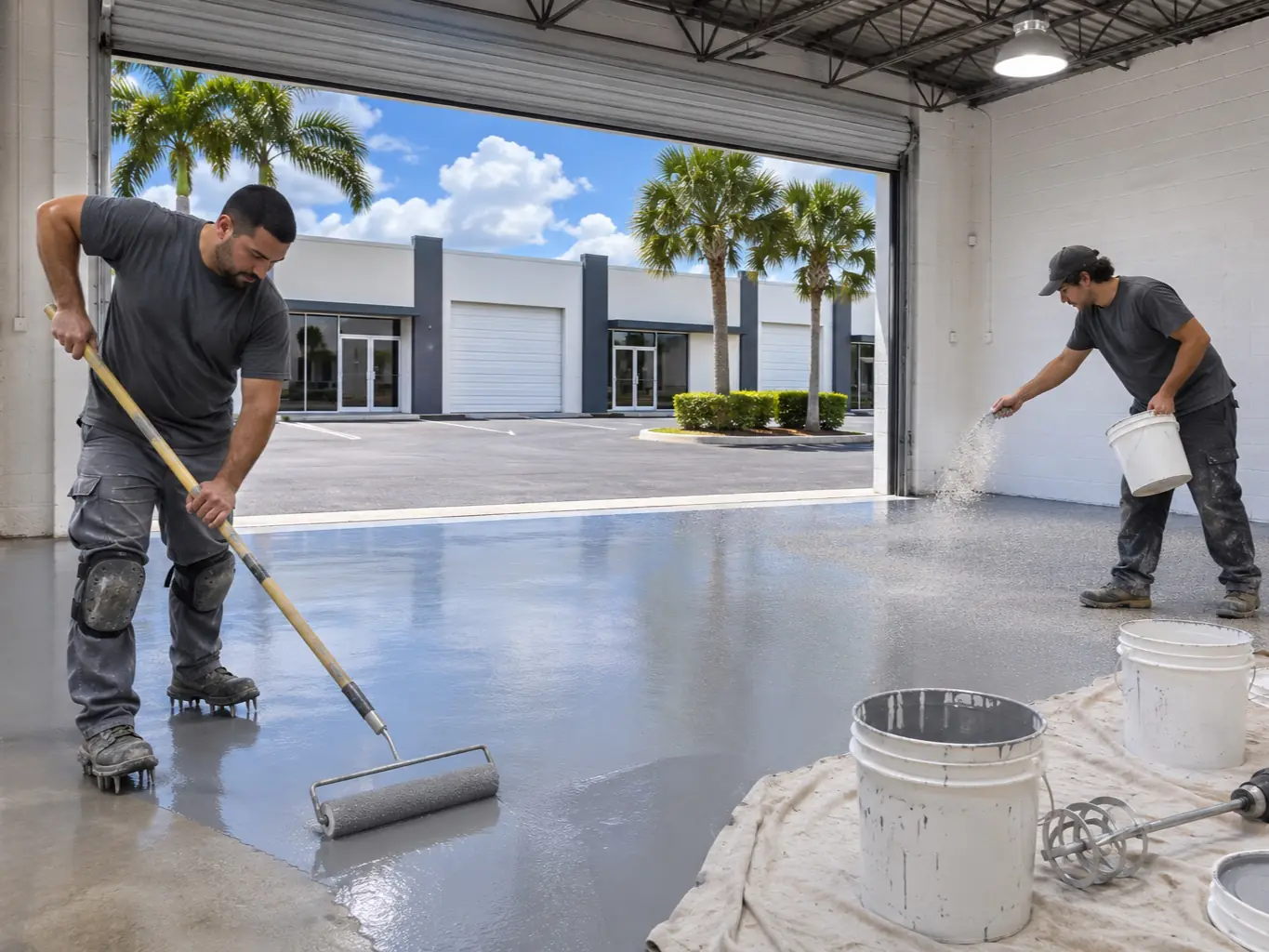
Warehouses, shops, restaurants, clinics, showrooms and light manufacturing.
Every day the floor is down is a day the business isn't working, so the fear is paying for the downtime twice: once for the install, and again when the coating lifts in the forklift lanes a year later. A commercial GC in Southwest Florida wrote about a 19k flooring job that failed, with the blame put on the condition of the concrete. We connect warehouse, shop and restaurant owners across Broward, Miami-Dade and southern Palm Beach with an independent contractor who does epoxy floors and concrete polishing and nothing else. Ask for the moisture reading, the prep and the closing schedule in writing before you sign. Call (561) 556-9756 and we'll connect you.
Can't shut down for a week? Ask for a phased or weekend schedule, with reopening times for foot traffic and for equipment.
Forklifts and pallet jacks? Ask how thick the system goes on in the turning zones.
Kitchen grease and washdowns? Say so on the first call. It changes the system.
If this sounds familiar
The final bill was more than the quote
The crew spent a couple of days grinding and patching, and then a bill for extra prep arrived. The condition of the slab drives a big share of the cost, and it's the part most bids gloss over. Have the slab walked, and ask what happens to the price if grinding turns up surprises.
The epoxy is coming up in goops
Soft, tacky or bubbling spots in the weeks after the install usually come from poor mixing, a humid room or moisture coming up through the slab. In a South Florida bay with the roll-up door open, all three are easy to get wrong. Ask how they control humidity and the dew point during cure.
It got scratched with the slightest chair or table movement
That restaurant owner had a glossy floor that ripped when anything heavy hit it, and it was extremely slippery. The coating was a residential product. Commercial floors need the thickness, texture and topcoat matched to what actually happens on them.
The worries owners raise most, answered
"How long will we be closed?"
It depends on the size of the space, the slab and the system. A small storefront on a sound, dry slab can often be done over a weekend. A warehouse is usually done in sections so part of it keeps shipping. Most systems take light foot traffic at about 24 hours and reach full chemical cure in about a week. Forklifts, racks and heavy carts come back last.
Ask: "When can people walk on it, and when can equipment go back on it?" Get both answers in writing.
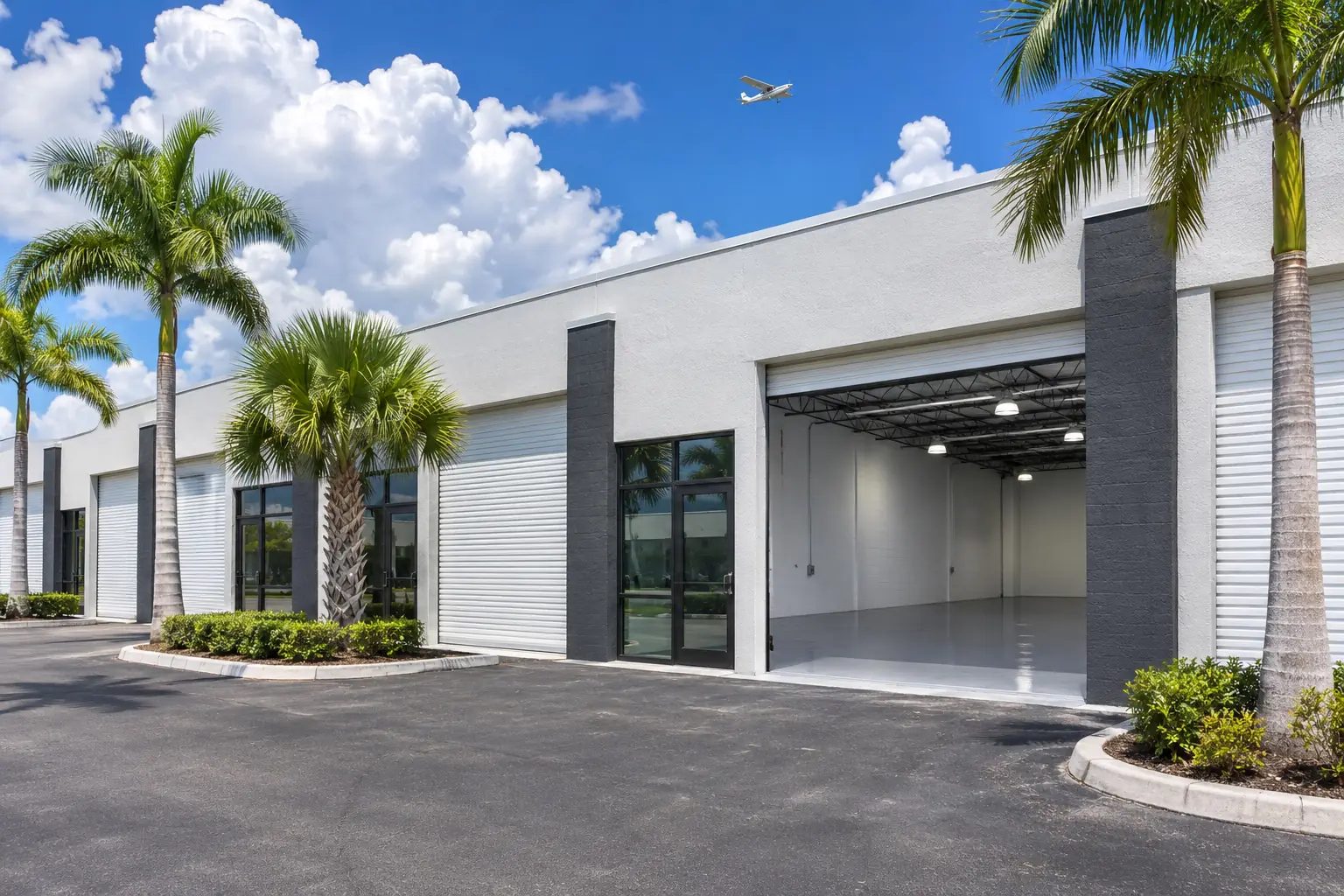
Scene image: a flex warehouse bay near Fort Lauderdale Executive Airport.
"Epoxy floors are much more vulnerable to abrasion, chipping and peeling"
Plenty of installers online prefer polyurea or polyaspartic topcoats, and for fast turnarounds they can be the better pick. In most commercial systems epoxy is still the base coat because it bonds hard and fills the slab. Chipping and peeling come back to prep and thickness far more than to the brand.
"Contractor took my deposit"
The worst commercial stories are deposits that vanished and warranties from a company that changed its name. Get the payment schedule in writing, and the warranty too, under the company's legal name. Ask what's covered on labor and on materials, and what isn't.
Call now and ask for the schedule and the scope in writing
A dry showroom and a wet kitchen need different floors. Tell the contractor what drives, spills and gets washed on the floor, and the system follows from that.
Space
What usually works
What to ask about
Warehouse and distribution
Thick epoxy system with a wear-resistant topcoat, safety lines and aisle markings
Thickness in the turning zones, and how a worn lane gets recoated later
Auto shop, wash bay, light manufacturing
Epoxy with broadcast grit for traction, and a chemical-resistant topcoat
Hot tire pickup, oil and solvents, and texture where the floor gets wet
Restaurant kitchen
Often urethane cement instead of epoxy, because of heat, grease and washdowns
Coving at the walls, drains, and whether it can go down overnight
Retail, clinic, showroom, gym
Epoxy, or decorative flake or metallic, with a UV-stable topcoat near glass
Scratch resistance where chairs and carts roll, and yellowing near storefront glass
Big, dry floor where upkeep matters most
Sometimes polished concrete instead
Whether the slab's cracks and patches are acceptable. More on polishing
Last updated
What moves the price on a commercial floor
Nobody can price a commercial floor without walking the slab. A cheap epoxy quote usually costs more later, because the savings come from skipped concrete prep, thinner materials, rushed labor, or no moisture protection. These are the lines to see itemized:
Removal and prep. Old coatings, tile, glue, diamond grinding, crack and joint repair.
Moisture. A vapor barrier coat if the slab reads wet. One installer puts it at $1 to $10 per square foot on its own (CPC Floor Coatings).
The system. Number of coats, total thickness, the topcoat and the percent of solids.
Extras. Safety lines, aisle markings, cove base at the walls and texture in wet zones.
Schedule. Night, weekend or phased work so the business keeps running.
Commercial floors in South Florida
Most of the work here is in rows of small-bay flex warehouses: the airpark around Fort Lauderdale Executive Airport, the SR 84 and I-595 corridor in Davie, and the West Hialeah warehouse district. Those bays often run with the roll-up door open, so humidity and afternoon storms reach the floor while it cures. A closed, conditioned space during the install matters more here than in most places.
The National Weather Service in Miami counts the wet season from May 15 to October 15. Slabs on flat, low ground can read wet even when they look dry, so the moisture reading belongs in the first visit, not halfway through the job.
Ask these on the call
Will you diamond grind the current floor, or is it an acid wash?
What was the moisture reading, and do I need a moisture vapor barrier epoxy?
Can I get a detailed, written proposal that outlines the full scope of work?
Where does the texture go so it isn't slippery when wet?
What is the warranty, and what are examples of what is covered and not covered?
What happens after you call
The call. The space, the square footage, what drives or spills on it and how long you can close.
The walk. The slab is checked in person for cracks, old coatings, oil and moisture.
The written scope. Prep, moisture plan, system and thickness, texture, schedule and price.
Prep. Diamond grinding with dust control, plus crack and joint repair.
Coating. Base and build coats, grit where it gets wet, lines, then the topcoat.
Reopening. Foot traffic first, then carts and forklifts once the system allows.
Commercial epoxy questions
How thick should epoxy be for forklift traffic?
Thicker than a garage floor, and thickest in the turning zones, where forklifts wear a floor first. The right number depends on the loads and the system, so ask the contractor to write the total thickness into the scope and explain how a worn lane gets recoated.
Can epoxy go in a commercial kitchen?
Sometimes, but kitchens with hot water, grease and daily washdowns are often better served by urethane cement, which handles heat and moisture. Either way the floor needs texture, and coving where it meets the walls. Say it's a kitchen on the first call.
Can you epoxy a warehouse floor in sections?
Yes. Large floors are often done in phases, so part of the building keeps working while another part is prepped, coated and cured. Ask for the phase plan and the reopening time for each section in writing.
What should you actually look for when choosing epoxy flooring?
Diamond grinding rather than an acid wash, a moisture reading before the price, a written scope with coats and thickness, texture where the floor gets wet, and a written warranty under the company's legal name.
Call and we'll connect you with a commercial epoxy contractor serving your area
Phones are answered Monday to Friday 9am to 7pm, Saturday and Sunday 9am to 2pm. Say what the space is, roughly how many square feet, and your zip code, and ask for the scope in writing before anyone starts.